Why Traditional To-Do Lists Fail Busy People (And What AI Reminders Can Do Better)
Why traditional to-do lists often create too much maintenance for busy people, and how AI reminders can make capturing daily intent lighter and more reliable.
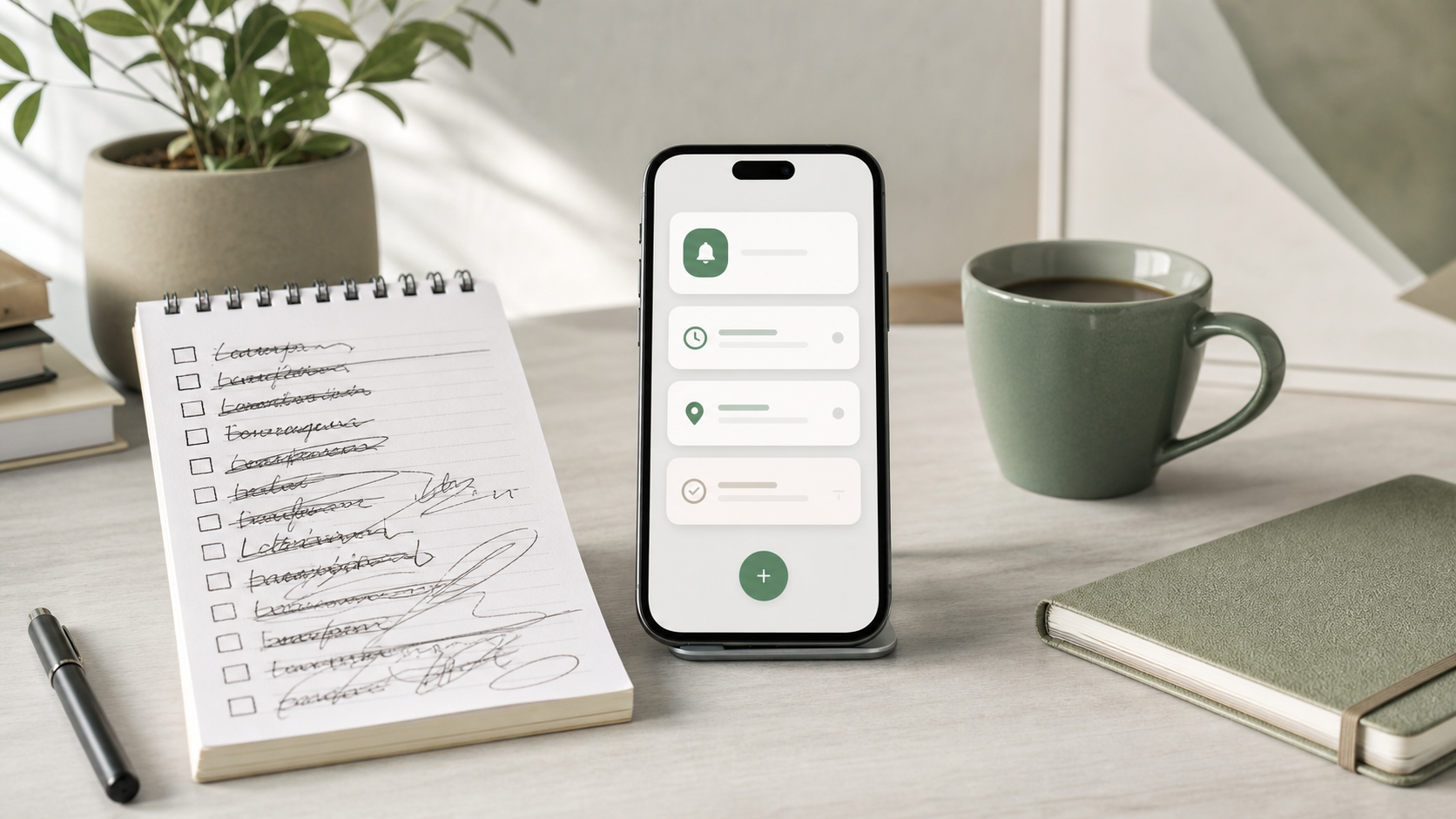
Product Thinking
I have used many to-do lists over the years. Some were simple. Some were beautifully designed. Some had projects, tags, priorities, subtasks, reminders, recurring rules, filters, and dashboards. They all promised the same thing: put your tasks in one place, organize them well, and life will feel more under control.
That promise works for some people. If you enjoy maintaining a system, a traditional to-do list can be powerful. But for many busy people, especially people who are already switching between work, family, health, errands, and messages all day, the to-do list becomes one more thing to manage. This challenge can be especially difficult for people with ADHD, or for anyone who struggles with executive function and working memory. The tool that was supposed to reduce mental load starts asking for its own attention.
This is one reason I started thinking differently about reminders when building Lumi. The problem is not that people lack apps. The problem is that many apps expect the user to behave like a project manager all day.
The real moment is not planning. It is remembering.
Most productivity tools are designed around planning. They assume you sit down, open an app, review your lists, decide what matters, and organize your work. That can be useful for larger projects, but a lot of daily life does not happen that way.
You remember something while walking into a meeting. You realize you need to buy something while cooking. You think of a bill while brushing your teeth. You need to call someone after lunch, take medicine at night, prepare a document next Thursday, or check something again in two weeks.
At that moment, the user does not want to build a system. They want to get the thought out of their head before it disappears. “Remind me to send the invoice next Friday” should not require a project, a label, a priority, and a review ritual. Five seconds later, the reminder should exist, and the user should be able to move on.
This is where many to-do lists feel heavier than they should. Even a simple task form can ask too much at the wrong time. Title. Date. Time. Repeat. List. Priority. Notes. Maybe a tag. Maybe a project. Maybe a notification setting. None of these fields are wrong, but together they create friction.
For a busy person, friction is often enough to lose the task.
Busy people do not always have clean categories.
Traditional to-do lists love categories. Work, personal, family, shopping, health, someday, urgent, later. The structure looks neat on a screen, but real life is often messier.
A reminder to “call Mom after the doctor appointment” is family, health, and timing. “Cancel the subscription before the free trial ends” is money, calendar, and admin. “Remind me every other Sunday to clean the coffee machine” is household, recurring, and easy to forget. The user may not care which category it belongs to. They just want the reminder to happen.
The more a tool asks users to classify their life, the more it risks turning small reminders into administrative work. For people who are already busy, that extra work is exactly what they are trying to avoid.
Lists are passive. Reminders need to be active.
A to-do list is good at holding tasks. It is less good at bringing the right task back at the right time unless the user configures it carefully and checks it regularly.
That difference matters. Many forgotten tasks are not forgotten because the user never wrote them down. They are forgotten because the task did not return at the right moment. A list can be full and still fail if it waits silently for the user to come back.
Daily reminders need a more active relationship. The product should understand when something needs to reappear, schedule it, show it clearly, and make it easy to change. For a one-time reminder, that may be simple. For recurring reminders, it can be more complex: every weekday morning, every other Sunday, the third working day of each month, or every few hours for a short period.
Most people can describe these schedules in plain language. They do not always want to configure them field by field.
A better reminder app should reduce input cost.
This is where AI can be useful, but not because a chat box is fashionable. AI becomes useful when it reduces the cost of capturing intent.
Instead of opening a form and thinking through every field, the user can say something like: “Remind me to water the plants every Monday and Thursday evening.” The app can turn that sentence into a reminder structure, then show the result so the user can confirm or edit it.
The important part is not replacing the user. The important part is removing unnecessary setup work. The user still owns the reminder. They should be able to inspect it, change it, pause it, restart it, or delete it. But they should not have to become a scheduler just to create a simple recurring task.
When I built Lumi, I started with this problem.
When I started building Lumi, I was not trying to create another task management system. I was interested in a simpler question: what if remembering something important could be as easy as saying it out loud? A reminder should begin with human intention, not with a form. The app can still have structure underneath, but the user should not have to touch all of that structure before the reminder becomes real.
That product direction matters because the first few seconds are often the whole opportunity. If the user has to stop and organize the thought, the thought may disappear. If the user can say it naturally, see the created reminder, and correct it if needed, the product has done something more useful than adding another list.
Traditional lists fail when they require too much maintenance.
The hidden cost of a to-do list is maintenance. A list gets old. Priorities change. Tasks become irrelevant. Recurring items need adjustment. Some tasks were created in a hurry and no longer make sense. Before long, the user has a second job: cleaning the system.
For people who love productivity systems, this maintenance can feel satisfying. For everyone else, it becomes guilt. The app fills up with overdue tasks, half-written ideas, and reminders that no longer match real life. Eventually the user stops trusting it.
A reminder product should try to avoid that feeling. It should make common changes lightweight. Move this to tomorrow. Pause this until next week. Stop reminding me about this. Restart this reminder. These are normal human decisions, and the product should support them without making the user dig through settings.
The goal is not a perfect system.
One lesson I keep coming back to is that most people are not trying to build a perfect productivity system. They are trying to protect small future moments from being forgotten.
Pick up the medicine. Call the school. Send the invoice. Drink water during a busy afternoon. Check in with a parent. Cancel the trial. Bring the document. Take a break. These are not always big projects, but missing them can still matter.
That is why I think the future of reminder apps should be less about beautiful lists and more about reliable assistance. A good app should let people capture reminders in the language they already use, bring those reminders back at the right time, and keep every result visible enough to trust.
Traditional to-do lists are not bad. They are just built around a mode of life that many busy people cannot maintain all day. For Lumi, the question is different: how can an app help when the user has only a few seconds, one messy sentence, and something important they do not want to forget?